29/09/2025
Betty is 80 years old and lives with severe osteoporosis, hip arthritis and a kidney catheter. Every time she had to be moved – to wash, to go from her bed to her wheelchair or to sit on her sofa – the pain would appear. That constant discomfort turned every transfer into a moment of fear and resistance, to the point where her body would tense up when just hearing the words: “we’re going to get you up”. Little by little, she began to spend almost the whole day in bed, not because she wanted to, but because moving without pain seemed impossible. Thus, her world was reduced to a single room.
When the body is in pain, every routine transfer becomes a challenge. Pain brings fear, resistance and the feeling that any movement could be torture. Many people with osteoarthritis, osteoporosis, stiffness due to neuromuscular conditions or old injuries experience it every day. In reality, very often it is not the transfer itself that hurts, but the way it is carried out: forced manoeuvres, unnecessary turns, slings that are poorly chosen or fitted using force. Movements that are uncomfortable, that hurt, that generate anxiety and distrust.
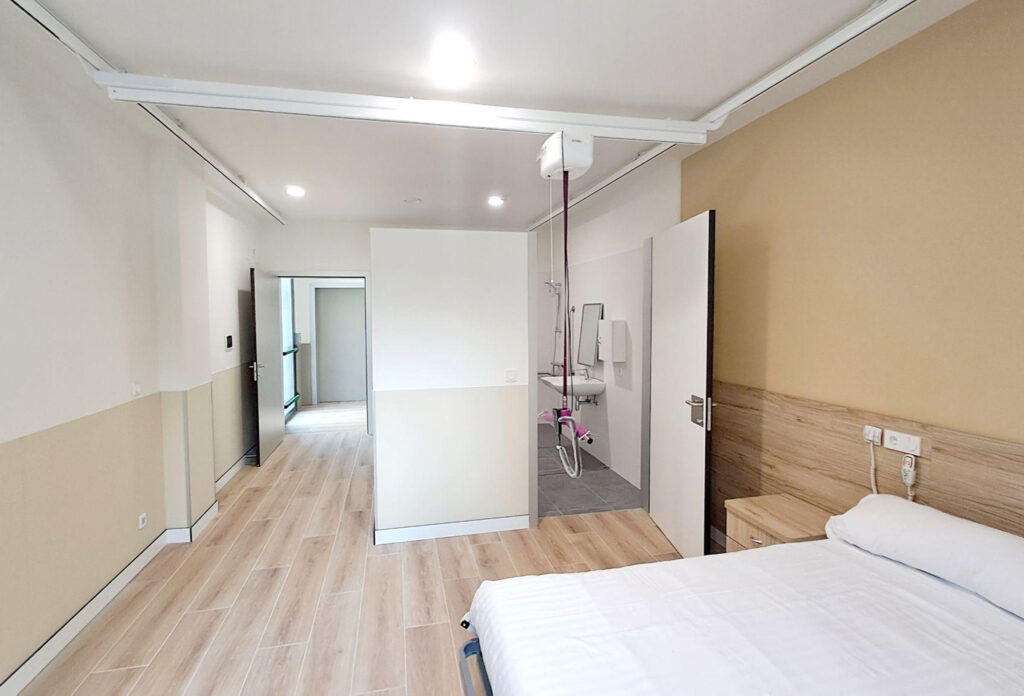
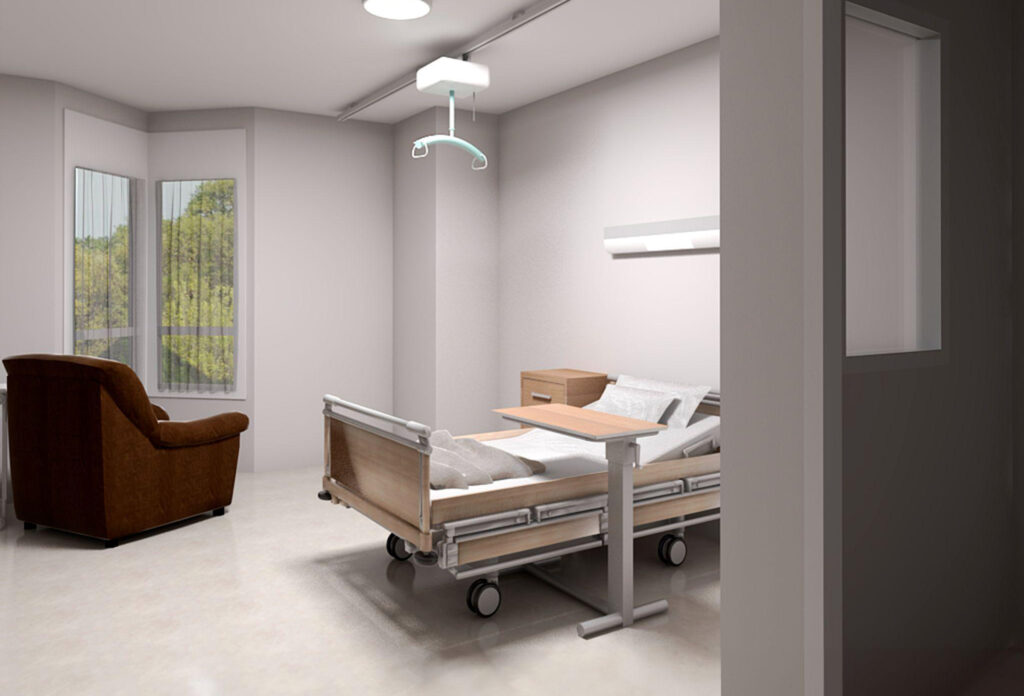
In this context, a ceiling hoist can be of great help: it makes it possible to carry out safe, continuous transfers from bed to wheelchair, to the toilet, to the shower or to other rooms, without physical effort for the user or for the carer. But in Betty’s case, even the idea of using it caused her tension. The fear of pain was still present. That is why, for the transfer to be truly comfortable and respectful, the hoist is just as important as the sling chosen to accompany it.
How to find the right sling?
Betty’s situation was analyzed in conjunction with her caregiver and a medical team. The goal wasn’t to try just any harness, but to find one that met her specific needs: constant pain, extreme sensitivity to movement, and very little tolerance for repeated manipulation.
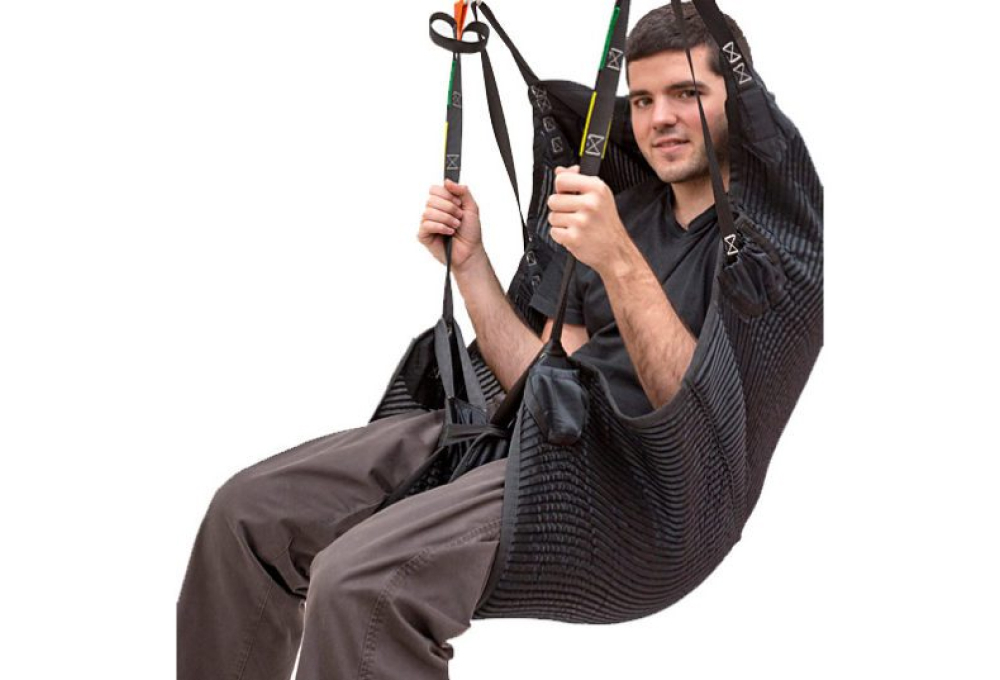
The solution was the Alba sling, designed for people who need full support with the least possible intervention when fitting it. It can remain in place while Betty is seated in her chair, without causing pressure or discomfort. Its fabric promotes ventilation and prevents heat build-up, with small grooves that help keep the skin cooler and drier, which is very important for those who spend many hours in a wheelchair.
Thanks to this, Betty can spend more time out of bed without discomfort, and her carer can hook the hoist back on again without needing to reposition the sling over and over again, reducing to a minimum the movements that used to cause her so much discomfort. This was a way to give her back movement and the ability to enjoy everyday life. And that had a profound impact on her wellbeing.
Benefits of ceiling hoists for people with osteoporosis
In cases of severe osteoporosis, such as Betty’s, everyday life becomes more vulnerable and full of precautions. Bones lose density and strength, which increases the risk of fractures even with small movements or minor falls. The pain is constant, and that pain leads to stiffness: the body tenses, protects itself and ends up avoiding movement. In the long run, this leads to greater muscle weakness and a greater fear of moving around.
That fear does not affect only the person with osteoporosis. The carer is also affected by this, as they often have to move the person without technical aids, bearing the weight and the uncertainty of whether a simple gesture or movement could cause an injury.
Ceiling hoists, together with a suitable sling, provide a safe and respectful response in these cases:
- They enable smooth transfers, without sudden twists or forced lifting.
- They reduce the risk of fractures and pain during transfers.
- They give confidence to the user, who feels supported and more at ease when moving.
- They make the caregiver’s work easier, as they no longer need to carry all the weight or improvise unsafe manoeuvres.
- They transform a moment of tension and anguish into a calmer, dignified and respectful action.
The importance of slings for ceiling hoists
As there is no single way to assist with a transfer, there are slings designed for a range of transfer situations and needs. A sling is not simply another tool of the ceiling hoist: it is the point of contact with the body; it is the bridge that allows movement without pain, with greater confidence and greater peace of mind.
That is why, every day we focus on finding solutions that truly adapt, that respect each person’s pace and needs, and that make it possible to transfer safely, with dignity in every movement and with greater wellbeing in everyday life.
Betty’s story reached us through Care Independence, manufacturer of Carima’s slings.
If you need guidance on slings or ceiling hoists to make your space more accessible and safer, you can contact us at info@carimatech.com
💚